
Bydgoszcz and the New Campus of the Academy of Music: Architecture Shaped by Water, Light, and Sound
Written by Admin • 2026-06-30 04:23:00
Topics
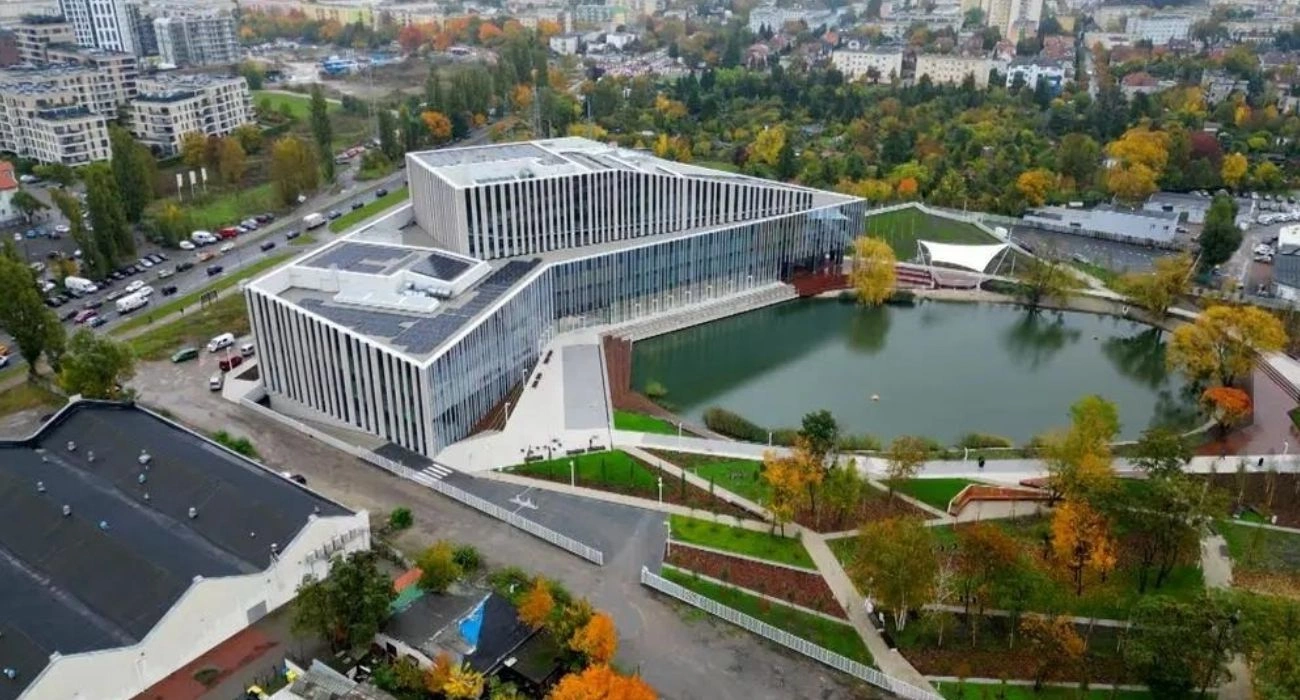
Bydgoszcz and the New Academy of Music: Where Architecture Listens to the City
Winner of the SARP Award 2026, the new Academy of Music campus reflects Bydgoszcz's transformation through water, culture, sound, and contemporary architecture.
A City Defined by Water and Reinvention
Some cities reveal themselves immediately. Others require time, attention, and a closer look. Bydgoszcz belongs firmly to the latter category.
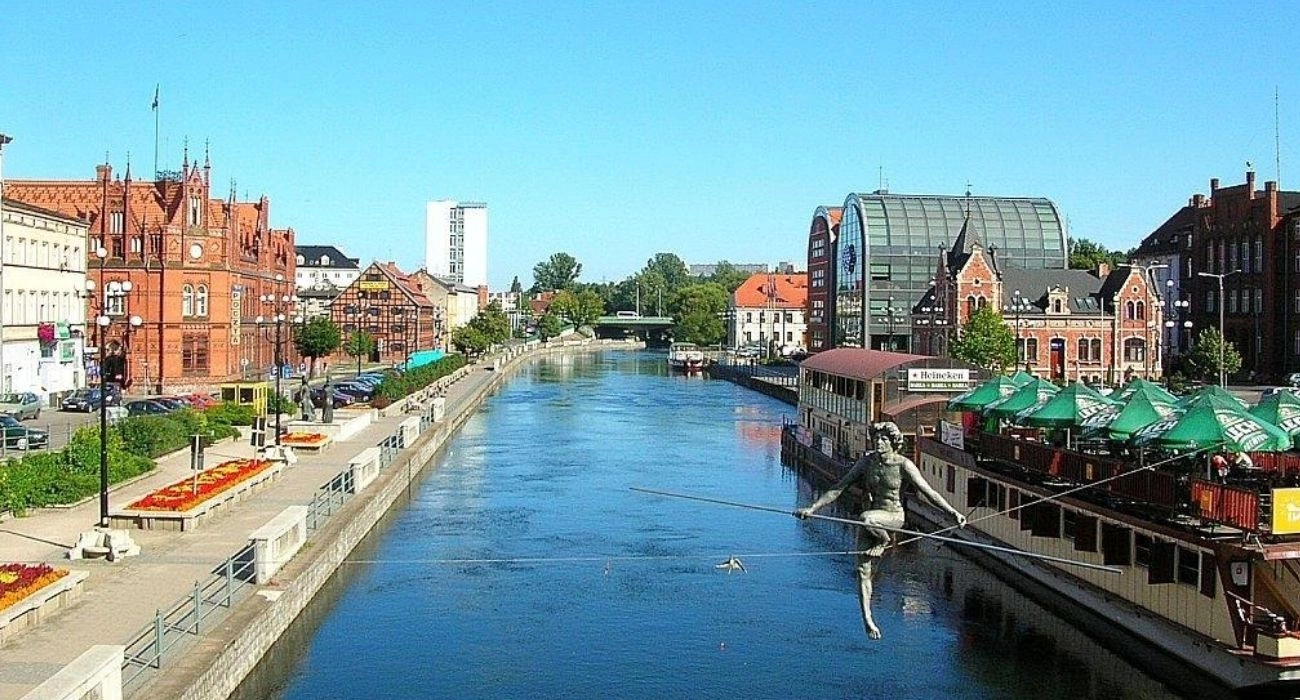
Situated along the Brda River and shaped by a complex network of waterways, canals, and industrial heritage, the city has spent decades quietly redefining its identity. Water is not merely a scenic backdrop in Bydgoszcz—it is one of the city's defining structures, influencing its geography, urban planning, and cultural development.
Over the last twenty years, former industrial districts have been transformed into public spaces, cultural institutions, and riverside destinations. This gradual urban transformation has turned Bydgoszcz into one of Central Europe's most distinctive examples of a city that embraces water as part of its identity rather than separating itself from it.
Within this evolving urban landscape stands one of Poland's most important contemporary architectural projects: the new campus of the Feliks Nowowiejski Academy of Music.
A New Landmark for Contemporary Polish Architecture
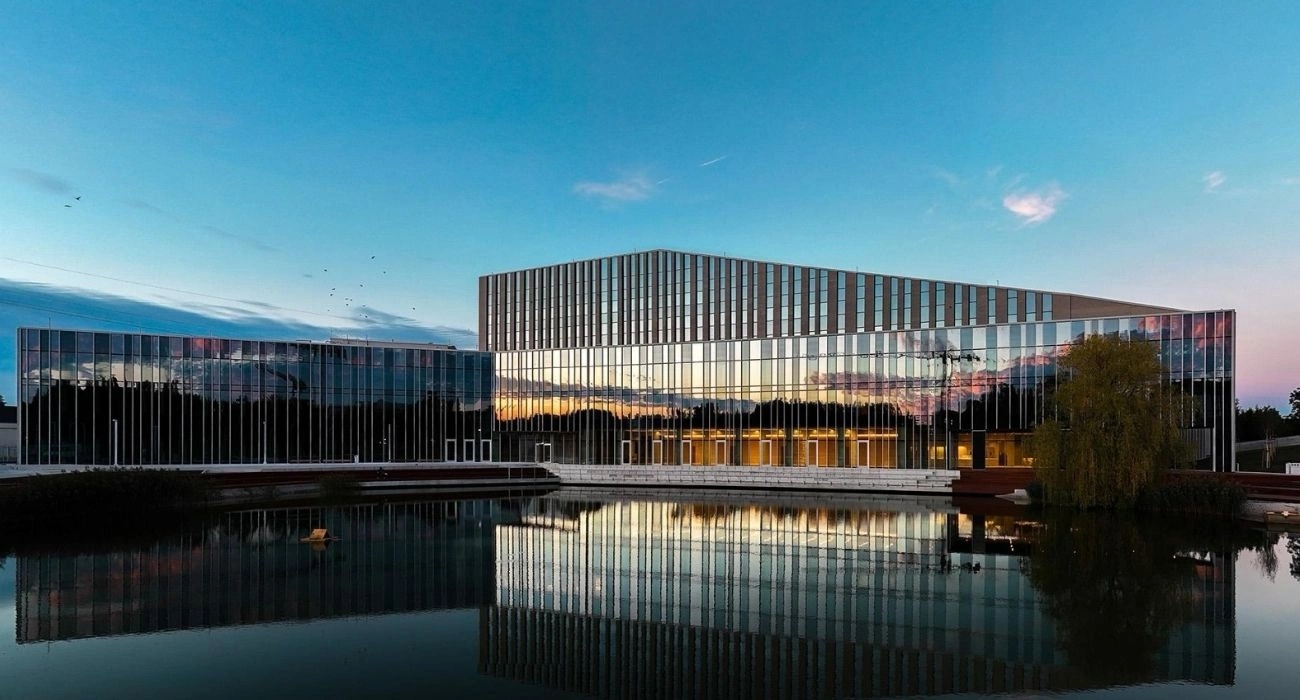
Recently awarded the prestigious SARP Award of the Year 2026, the new Academy of Music campus has quickly established itself as one of Poland's most significant cultural and educational architecture projects.
Designed by Plus3 Architekci, the campus occupies a former industrial brickworks site. Rather than erasing the location's industrial past, the architects chose to reinterpret it, transforming the area into a landscape where history, culture, and contemporary design coexist.
The project demonstrates how architecture can become an act of urban storytelling, preserving memory while creating entirely new forms of public experience.
When Water Becomes Architecture
One of the campus's most remarkable features is its relationship with water.
Instead of functioning as decorative elements, water surfaces serve as part of the architectural composition itself, organizing movement, visual perspectives, and atmosphere throughout the site. Reflections constantly shift depending on weather conditions, seasons, and the movement of light, ensuring that the campus never appears exactly the same twice.
The architectural language remains deliberately restrained. Horizontal forms, expansive glass façades, and partially embedded structures allow the buildings to become part of the landscape rather than dominate it.
This approach reflects the broader urban philosophy that has increasingly defined modern Bydgoszcz: architecture should cooperate with its environment rather than compete against it.
Designing Architecture for Sound
While the campus's visual qualities immediately attract attention, its true complexity lies within its interior spaces.
As one of Europe's most advanced educational facilities dedicated to music, the campus contains rehearsal rooms, lecture halls, recording studios, and concert venues designed according to sophisticated acoustic principles.
In this context, architecture becomes more than a visual discipline. Every surface, material, and spatial proportion directly influences the behavior of sound.
The result is a building where acoustics, engineering, architecture, and artistic expression function as a single integrated system rather than separate technical considerations.
Why the SARP Jury Recognized the Project
The jury of the SARP Award 2026 highlighted precisely this exceptional integration of disciplines.
Rather than treating architecture, landscape design, and acoustics as independent elements, the project combines them into a unified spatial experience. This balance between technical precision and emotional atmosphere distinguishes the campus from many contemporary public buildings.
The Academy of Music therefore succeeds not only as an educational institution but also as an architectural statement about how cultural spaces can be designed in the twenty-first century.
The Transformation of Bydgoszcz
The significance of the project extends far beyond architecture alone.
For decades, Bydgoszcz's identity was closely connected to industry, waterways, and trade. Today, the city increasingly defines itself through culture, education, public space, and environmental regeneration.
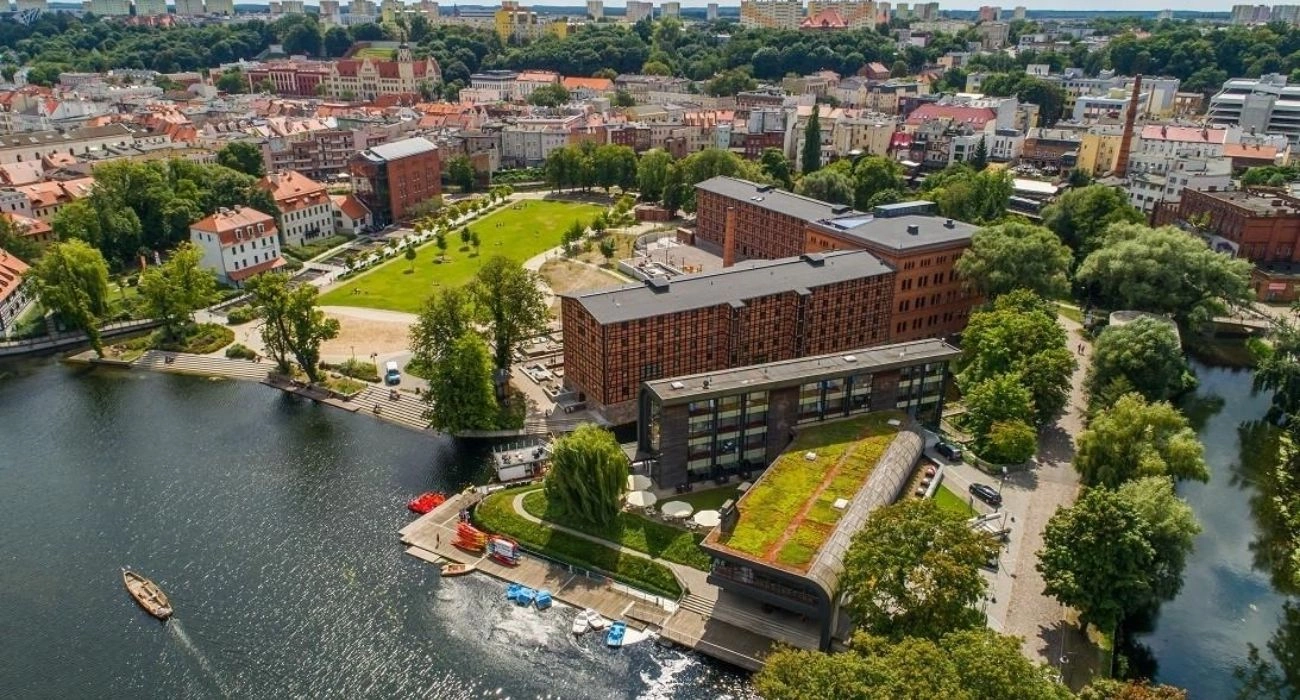
The Brda River now connects restored industrial buildings, museums, cultural institutions, public parks, and revitalized urban spaces such as Mill Island, creating one of Poland's most recognizable riverside environments.
In this context, the Academy of Music campus does not function as an isolated architectural object. Instead, it becomes part of a larger urban narrative—a continuation of Bydgoszcz's ongoing transformation.
A New Model for Cultural Institutions
The campus also reflects broader changes in contemporary architecture worldwide.
Increasingly, cultural institutions are moving away from isolated, monumental buildings toward open and accessible public environments that encourage interaction between institutions and the communities they serve.
The Academy of Music embraces this philosophy through its integration with public parks, pedestrian routes, recreational spaces, and the surrounding urban fabric.
As a result, the campus functions not only as a university but also as a public space designed to enrich everyday life within the city.
- The Academy of Music campus was built on a former industrial brickworks site.
- The project received Poland's prestigious SARP Award of the Year 2026.
- The campus integrates architecture, landscape design, and acoustic engineering into a single system.
Contribution to Society
The new Academy of Music campus contributes not only to education and artistic development but also to urban regeneration, cultural accessibility, and public space design. It demonstrates how architecture can support community identity while preserving historical context and encouraging future cultural growth.
When Cities Learn to Listen
The new Academy of Music campus represents far more than an architectural achievement or an educational investment. It reflects a broader transformation in how cities understand their own identity, history, and future. By integrating water, landscape, sound, and public space into a single experience, the project demonstrates that architecture can function simultaneously as infrastructure, culture, memory, and community. In many ways, the campus embodies the story of Bydgoszcz itself—a city that has gradually transformed its industrial heritage into a source of cultural strength and urban renewal. Here, architecture does not simply occupy space; it responds to it, listens to it, and ultimately becomes part of the ongoing conversation between a city and its people.
Categories
Tagged in this story
Image sources