
Erik Vlček: The Enduring Pursuit of Olympic Excellence
Written by Admin • 2026-10-20 02:59:00
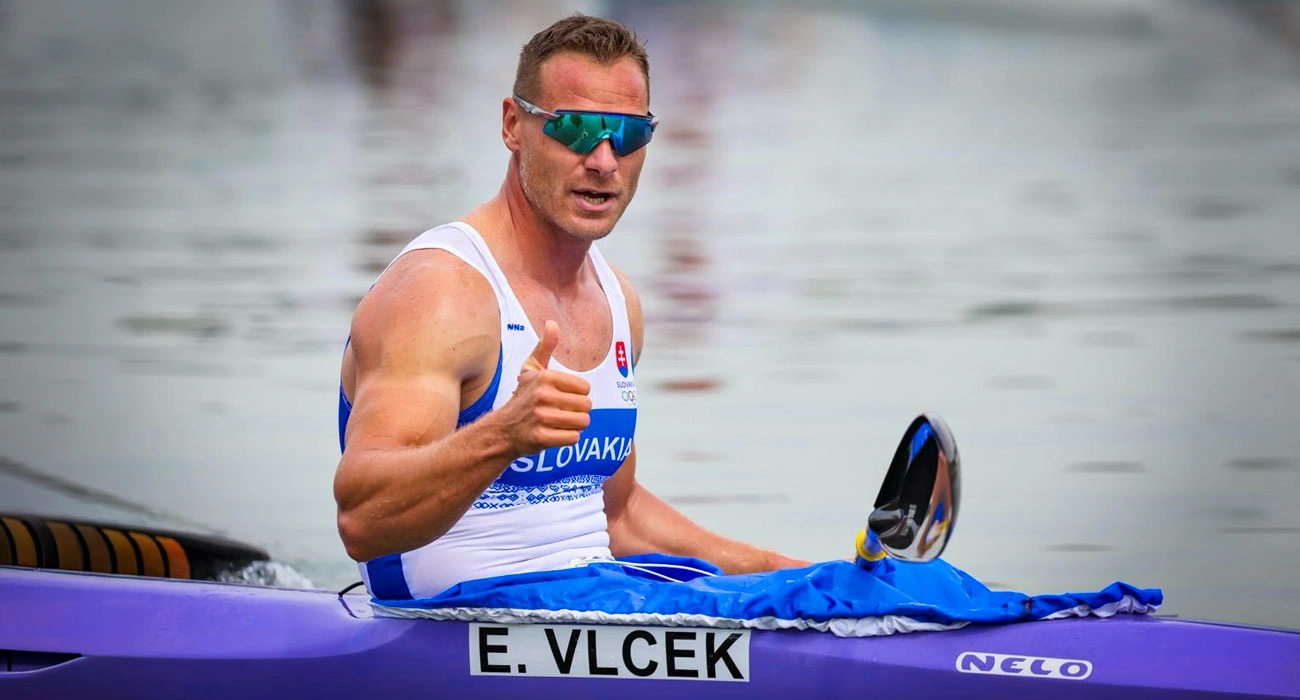
With six Olympic appearances, four Olympic medals and ten world championship titles, Erik Vlček built one of the most distinguished careers in Slovak sprint kayaking.

Erik Vlček: The Enduring Pursuit of Olympic Excellence
How Slovakia’s six-time Olympian built a remarkable career through resilience, teamwork and a commitment to the future of canoe sprint.
A Journey of Resilience and Excellence
For many athletes, competing at one Olympic Games represents the culmination of years of sacrifice. For Erik Vlček, the journey stretched across six editions, spanning more than two decades of international competition. Born in Komárno, Slovakia, on 29 December 1981, Vlček became one of the country’s most accomplished canoe sprint athletes, building a legacy defined not only by medals but also by extraordinary longevity.
His relationship with the sport began at just seven years old, when his parents took him to a local kayaking facility in his hometown. Komárno, situated at the confluence of the Danube and Váh rivers, has a strong canoeing tradition and a history of producing competitive paddlers. What began as a childhood introduction gradually developed into a career that would place Vlček among Slovakia’s most distinguished Olympians.
The early years required the same foundations that would sustain him throughout his career: consistent training, technical precision and the ability to work within a team. Canoe sprint is a sport in which physical power alone is insufficient. Athletes must coordinate their movements, maintain rhythm and respond to the demands of competition with exceptional timing. In a four-person kayak, individual strength must serve a shared objective.
Vlček’s eventual achievements reflected this combination of personal discipline and collective performance. His story also demonstrates that sporting excellence is rarely a single breakthrough. It is more often the result of returning to training, adapting to new circumstances and remaining competitive as teammates, opponents and the wider sporting environment change.
Six Olympic Games, One Remarkable Career
Vlček’s Olympic journey began in Sydney in 2000, when he competed in the K4 1,000-metre event and finished fourth. A medal remained just out of reach, but the experience marked the beginning of an international career that would continue through Athens, Beijing, London, Rio de Janeiro and Tokyo.
At Athens 2004, the Slovak K4 secured bronze. Four years later, the crew won silver in Beijing, establishing Vlček as an Olympic medallist. The London 2012 Games brought another demanding chapter, with sixth place in the K4 1,000 metres and eighth in the K2 1,000 metres. At Rio 2016, the K4 returned to the Olympic podium with another silver medal.
His sixth appearance came at Tokyo 2020, held in 2021 because of the pandemic. Competing in the K4 500 metres, the Slovak crew earned bronze. The result added another medal to his collection and completed an Olympic journey spanning 21 years, from Sydney to Tokyo.
Across those six appearances, Vlček collected four Olympic medals: two silver and two bronze. He also became the first Slovak athlete to compete at six Olympic Games, according to the Slovak Olympic Team. The distinction reflects more than an ability to reach the highest level once. It represents repeated qualification, sustained preparation and the capacity to remain relevant across different generations of competitors.
The Challenge of Staying Competitive
Longevity in elite sport is often celebrated through medal counts, but the process behind it is less visible. Maintaining an international standard requires athletes to manage training demands, physical recovery, changing competition formats and the arrival of younger challengers. In a team discipline, they must also continually establish effective combinations with other paddlers.
Vlček’s career illustrates this challenge. He continued competing well beyond the age at which many athletes leave elite sport. In interviews, he acknowledged that his long career had involved considerable work and that remaining competitive required him to keep proving his performance. His achievements were not simply a consequence of experience; they depended on continuing to meet the demands of selection and international competition.
The pursuit of a seventh Olympic appearance ended before Paris 2024. In 2024, Vlček explained that problems with his left shoulder had affected his preparation and prevented him from reaching the form required for qualification. The disappointment was significant: after competing at every Olympics from 2000 through 2020, he had to confront the possibility that another Games would not be part of his story.
Such moments offer a different perspective on sporting success. An athlete’s career is shaped not only by victories but also by the decisions, limitations and uncertainties that accompany competition. Vlček’s experience provides a reminder that resilience does not mean avoiding setbacks. It means responding to them while recognising that circumstances, including physical condition, can change.
Excellence is not a single finish line; it is the discipline to return, adapt and compete again.
A Record Built on Teamwork
Vlček’s Olympic medals form only part of his international record. The Slovak Olympic Team credits him with ten world championship titles—seven in the K4 and three in the K2—and eleven European championship titles in the K4. By the end of 2021, his profile recorded 43 medals from major competitions.
These achievements highlight the breadth of his success across different competitions and team configurations. His experience in both the K2 and K4 also reflects the need to adapt to different partnerships and tactical demands. While the larger crew requires four paddlers to operate in synchronisation, the two-person kayak creates a different dynamic, placing distinct demands on coordination and shared decision-making.
Team success depends on more than the strongest individual athlete. Timing, communication, trust and consistency can determine whether a crew performs as a unified unit. Vlček’s repeated success in the K4 underlines the importance of these collective qualities in a sport where the margin between medal positions can be narrow.
His achievements also helped maintain Slovakia’s visibility in international canoe sprint. For a country with a proud paddling tradition, sustained results at major championships provide more than individual recognition: they contribute to the wider story of national sporting identity.
- Vlček competed at Sydney 2000, Athens 2004, Beijing 2008, London 2012, Rio 2016 and Tokyo 2020, with the Tokyo Games held in 2021. He became the first Slovak athlete to reach six Olympic appearances.
- He won silver at Beijing 2008 and Rio 2016, and bronze at Athens 2004 and Tokyo 2020, all as part of Slovakia's K4 crew.
- The Slovak Olympic Team records ten world championship titles, eleven European championship titles and 43 medals from major competitions in its December 2024 career retrospective.
From Athlete to Sports Leadership
Vlček’s connection to canoeing has increasingly extended beyond competition. In October 2024, he became chair of the flatwater section of Slovak Canoeing. The appointment marked a new chapter in a career long associated with the sport’s competitive side.
In an interview following his election, Vlček identified club development and participation as important priorities. He spoke about attracting more children to canoeing, increasing awareness of the sport, supporting existing clubs and establishing new ones. He also highlighted the importance of improving club infrastructure and creating conditions in which young athletes could develop.
These priorities connect his experience as an elite competitor with the broader needs of the sport. International medals depend on a wider system: accessible clubs, committed coaches, training facilities and opportunities for young people to discover their abilities. Without that foundation, future champions have fewer opportunities to emerge.
The transition from athlete to administrator also presents a different kind of responsibility. Competitive sport rewards personal and team performance, while leadership requires attention to institutions, resources and the needs of an entire sporting community. Vlček’s new role places him in a position to contribute to those conditions, although the long-term impact of his work will depend on how initiatives are developed and implemented.
A Legacy That Continues Beyond the Water
Erik Vlček’s legacy is defined by more than four Olympic medals or an exceptional record of international titles. It is also a story of continuity: a young kayaker from Komárno who developed into a six-time Olympian and later took on a leadership role within the sport that shaped his life.
His career demonstrates the value of sustained commitment, but it also shows why sporting legacies should be understood in broader terms. The end of an Olympic journey does not erase the knowledge accumulated through years of competition. Experience can continue to serve a purpose when it is shared with clubs, coaches, young athletes and the organisations responsible for developing future talent.
For emerging paddlers, Vlček’s journey offers a compelling example of what long-term dedication can achieve—and an equally important reminder that progress depends on supportive sporting communities. His work in Slovak Canoeing creates an opportunity to contribute beyond the finish line, helping strengthen the environment in which the next generation may pursue its own ambitions.
BritishPEDIA Showcase highlights individuals whose achievements reveal not only personal excellence but also the potential to create lasting value. Vlček’s story belongs in that conversation: a career shaped by perseverance, strengthened through teamwork and now connected to the future of Slovak canoe sprint.
A Legacy That Continues Beyond the Water
Categories
Tagged in this story
Image sources