
Europe’s Fashion Industry Is Betting on Circularity: But Can It Scale?
Written by Admin • 2026-08-18 01:09:00
Topics
Europe's fashion industry is increasingly investing in circularity, transitioning from sustainable practices to a scalable economic model. With projected market values of nearly €104 billion by 2030, the focus shifts toward making circular fashion commercially viable through innovations in repair, resale, and recycling.
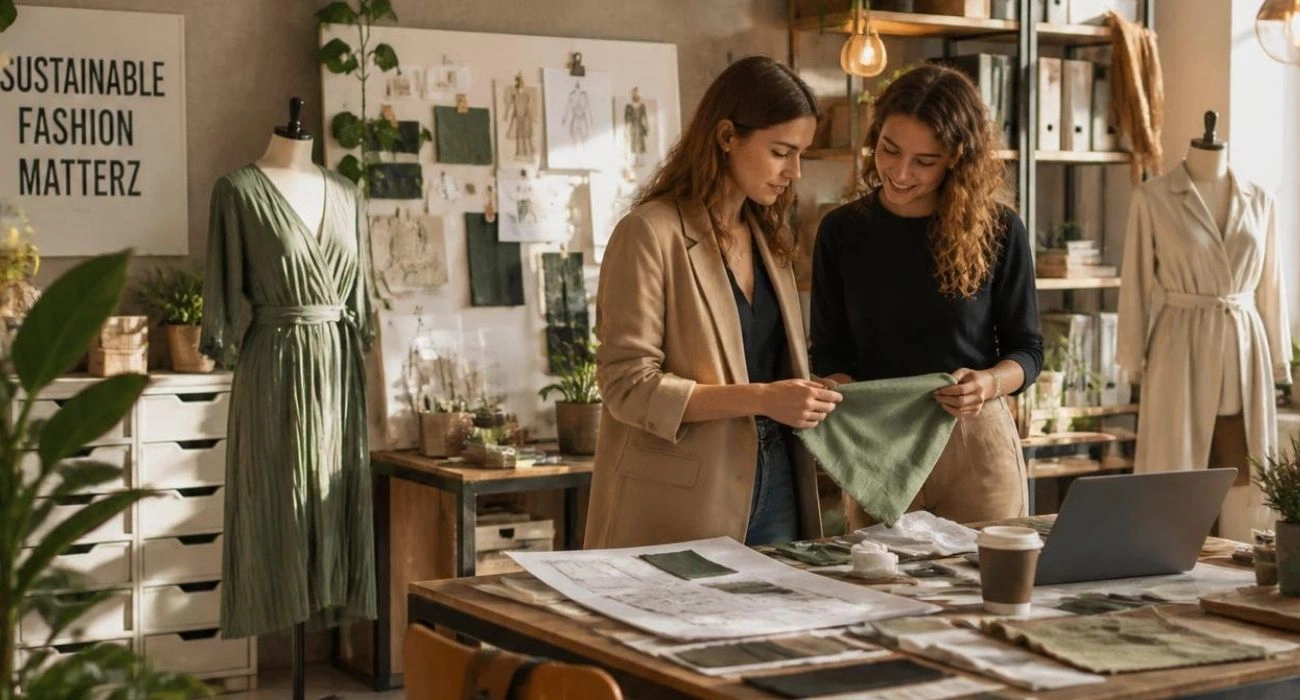
Europe’s Fashion Industry Is Betting on Circularity
Can circular fashion move from promising experiments to a genuinely scalable European industry?
The Shift Toward Circular Fashion
For years, sustainable fashion has been framed as a consumer preference in Europe. However, the dialogue is evolving into a broader economic and industrial narrative. As we approach 2026, initiatives are being rolled out that emphasize the importance of transitioning from small-scale experiments in clothing repair, resale, and recycling to commercially viable business models. The European fashion industry is recognizing the potential of circularity not just as a trend, but as a key driver of future economic growth.
The European Investment in circular fashion is evident with the launch of EIT Culture & Creativity's €2.5 million Fashion Shift funding call aimed at supporting businesses focused on circular and responsible fashion. This strategic funding aims to enhance cross-border collaboration and scalability, positioning circular fashion as a significant player in Europe's economic landscape.
Economic Potential of Circular Fashion
A study by the Circular Fashion Federation and KPMG France in 2026 estimates that circular activities such as eco-design, second-hand markets, repair, and recycling could generate nearly €104 billion in market value by 2030. This transformation could also support over 88,000 jobs, highlighting the significant economic opportunities that a shift toward circularity can provide. The challenge remains: can these initiatives scale effectively to compete with traditional fashion's speed and volume?
The future of fashion may depend less on producing more and more on making what already exists valuable for longer. The circular fashion movement aims to foster a deeper relationship between consumers and their clothing, emphasizing durability, reuse, and resource efficiency over constant replacement.
The future of fashion may depend less on producing more and more on making what already exists valuable for longer.
Facts & Insights
- A 2026 Circular Fashion Federation and KPMG France study identifies eco-design, second-hand, repair, and recycling as four major drivers of circularity in Europe's fashion industry.
- The study estimates that these circular activities could represent nearly €104 billion in European market value by 2030.
- EIT Culture & Creativity launched a €2.5 million Fashion Shift funding call in 2026 to help circular and responsible fashion initiatives scale and collaborate across Europe.
€104B
Potential European Circular Fashion Market by 2030
88K+
Potential Jobs Supported
€2.5M
Fashion Shift Funding Call
4
Key Circularity Drivers
Categories
Tagged in this story
Image sources
Canva