
Poznań Cathedral: Where a Nation Took Shape
Written by Admin • 2026-06-09 01:24:00
Topics
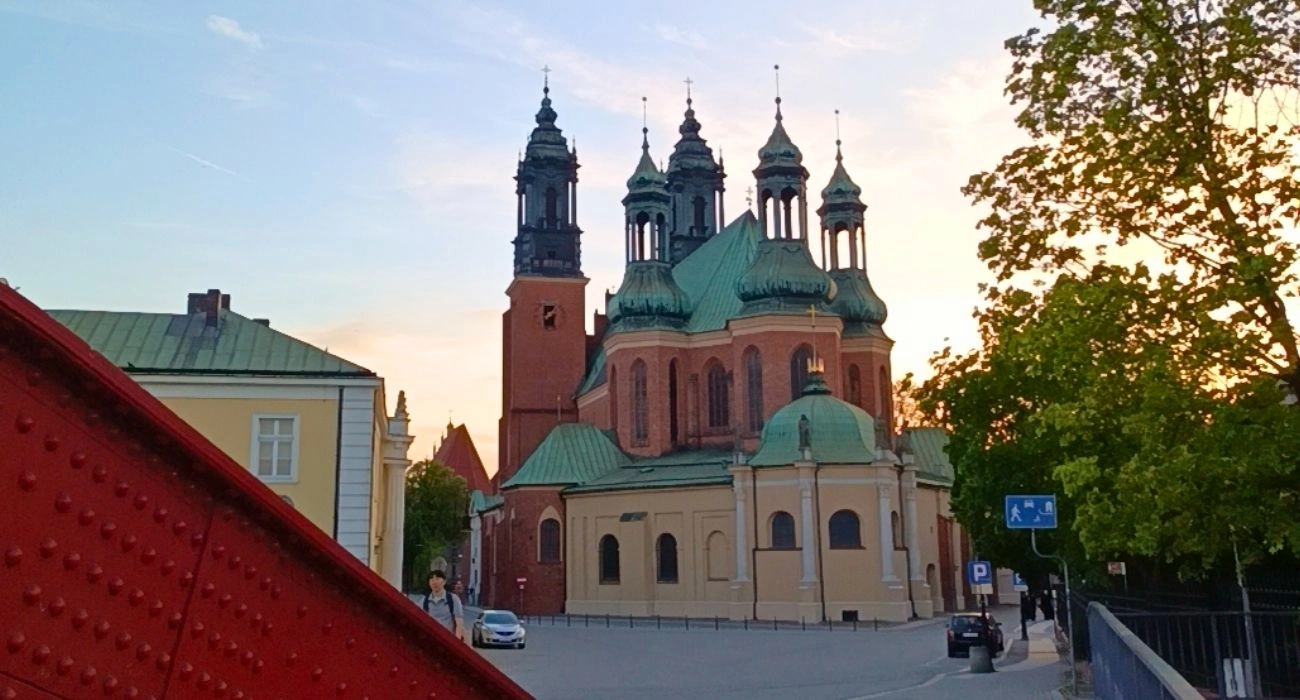
The Island at the Heart of Early Poland
On a small island formed by the rivers Warta and Cybina stands a building that occupies a unique place in Polish history. The Cathedral Basilica of Saints Peter and Paul in Poznań is not merely the oldest cathedral in Poland. It is a witness to the moment when a collection of tribal territories began to transform into a state, and when Christianity became one of the foundations of what would eventually become the Polish nation.
Its location is no coincidence. Ostrów Tumski, the island on which the cathedral stands, was once the political and religious center of the early Piast realm. Long before Warsaw became the capital and before Kraków emerged as the royal city of Poland, this island ranked among the most important places in the country. It was here that the foundations of Polish statehood and religious identity began to take shape.
The Birth of a Christian Kingdom
The cathedral's origins reach back to the second half of the tenth century, during the reign of Mieszko I, the first historical ruler of Poland. Shortly after his conversion to Christianity, Poznań became the seat of the first Polish bishopric. The cathedral that arose there was therefore not simply a place of worship. It stood as a symbol of a new political and cultural order.
Dedicated to Saint Peter from its earliest days, the church expressed the young state's connection to Rome and the wider Christian world. In many ways, the history of the cathedral mirrors the history of Poland itself: the emergence of a new kingdom on the eastern frontier of medieval Europe and its gradual integration into the community of Christian nations.
A Thousand Years of Destruction and Renewal
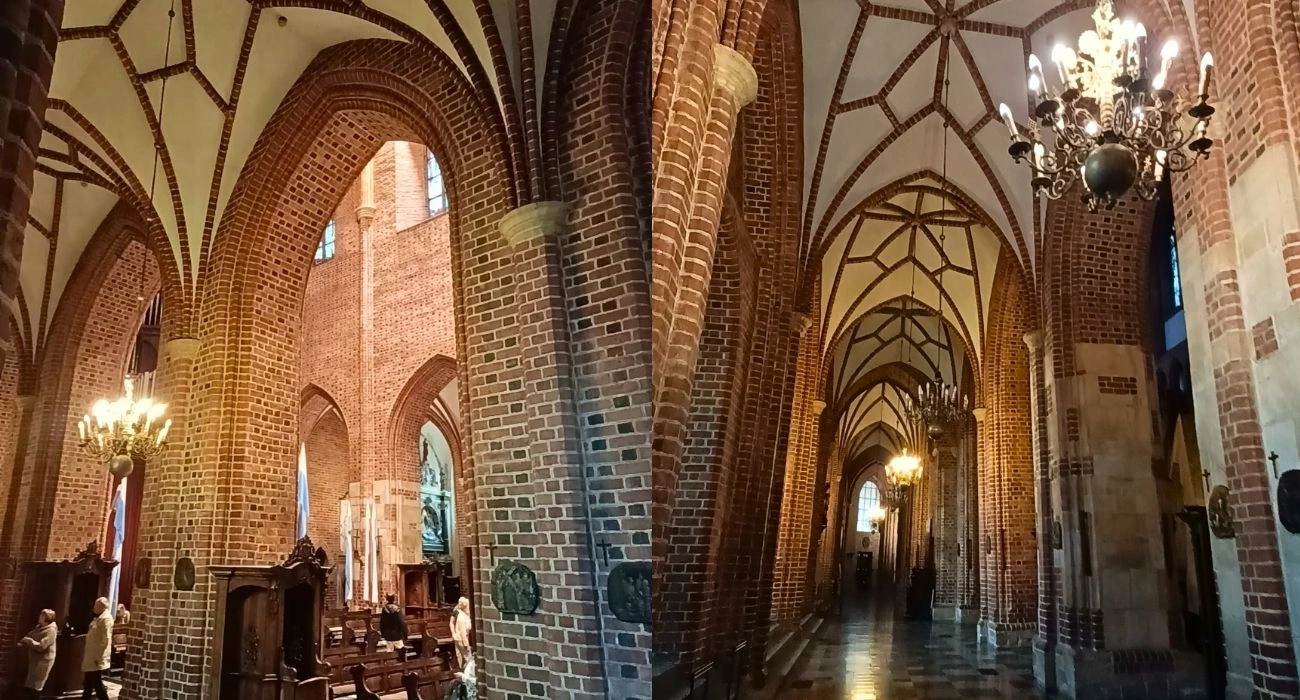
Few buildings in Central Europe have experienced such a long and turbulent history. The first cathedral, built around 968, was destroyed during a Czech invasion in the eleventh century. It was later rebuilt in Romanesque form, transformed into a Gothic church, and subsequently reshaped according to Baroque tastes after fires, storms, and structural collapses.
Each generation left its mark on the building. As a result, the cathedral became a living record of changing artistic styles and historical circumstances. Medieval brickwork stands alongside Renaissance additions and Baroque influences, telling a story of continuous adaptation rather than static preservation.
The twentieth century brought one of the cathedral's darkest chapters. During the fierce fighting for Poznań in 1945, the building suffered devastating damage and much of it burned. Yet this destruction unexpectedly revealed hidden Gothic elements concealed beneath later modifications. When reconstruction began after the war, architects chose to restore the cathedral largely to its late medieval appearance, allowing its Gothic character to emerge once more.
The Resting Place of Poland's Earliest Rulers
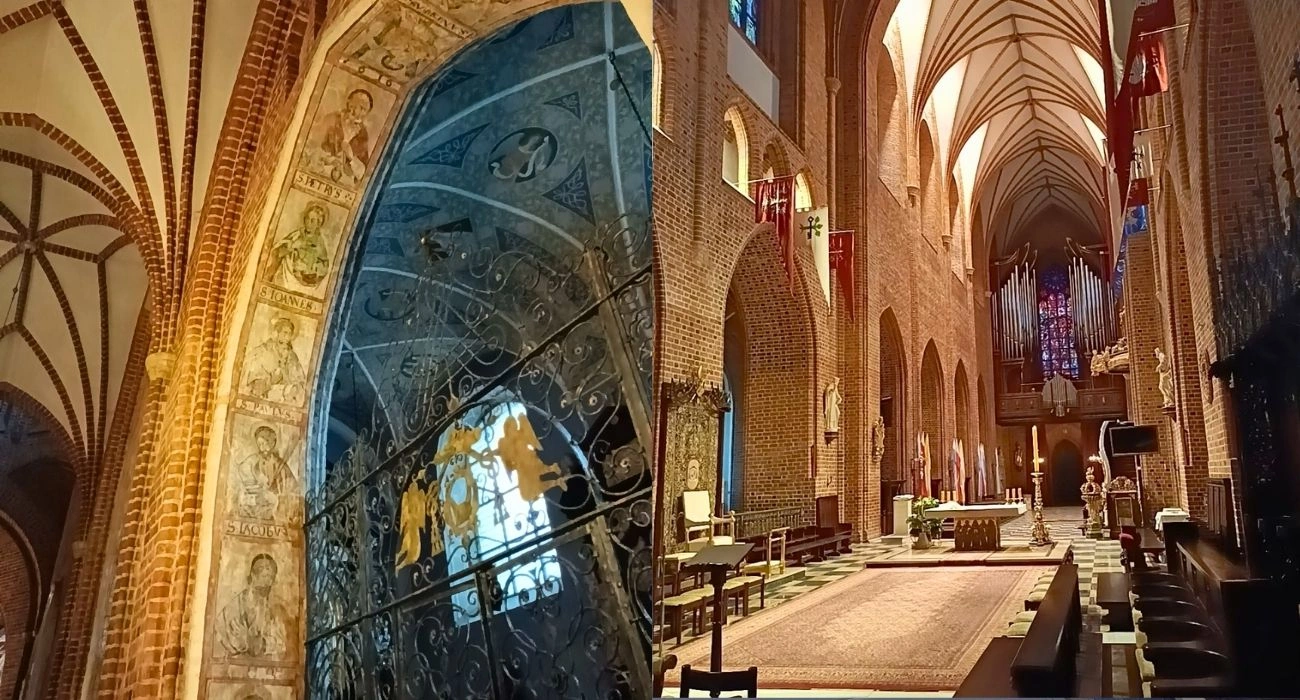
What distinguishes Poznań Cathedral from many other great churches of Europe is its role as a royal necropolis. According to tradition, the remains of the earliest Polish rulers, including Mieszko I and his son Bolesław the Brave—the first king of Poland—rest within its walls.
For centuries, the cathedral has therefore been regarded not only as a religious monument but also as a national pantheon. The burial of rulers here transformed the church into a place where the origins of Polish statehood could be remembered and celebrated. Much like Westminster Abbey in England or Saint-Denis in France, Poznań Cathedral became inseparable from the story of the nation itself.
The Golden Chapel and the Search for National Memory
Among the cathedral's most remarkable spaces is the Golden Chapel, created in the nineteenth century as a mausoleum for Mieszko I and Bolesław the Brave. Richly decorated with gilding, frescoes, and monumental bronze sculptures, it reflects the Romantic-era fascination with national origins.
Its construction carried particular significance because Poland no longer existed as an independent state. During the nineteenth century, the country had been partitioned by neighboring powers and disappeared from the political map of Europe. In that context, commemorating the founders of the Polish state became an act of cultural memory and national affirmation.
The chapel transformed the distant medieval past into something visible and tangible, reminding visitors that the roots of Polish identity stretched back many centuries before the partitions and political upheavals that followed.
Treasures of Faith, Art and Legend
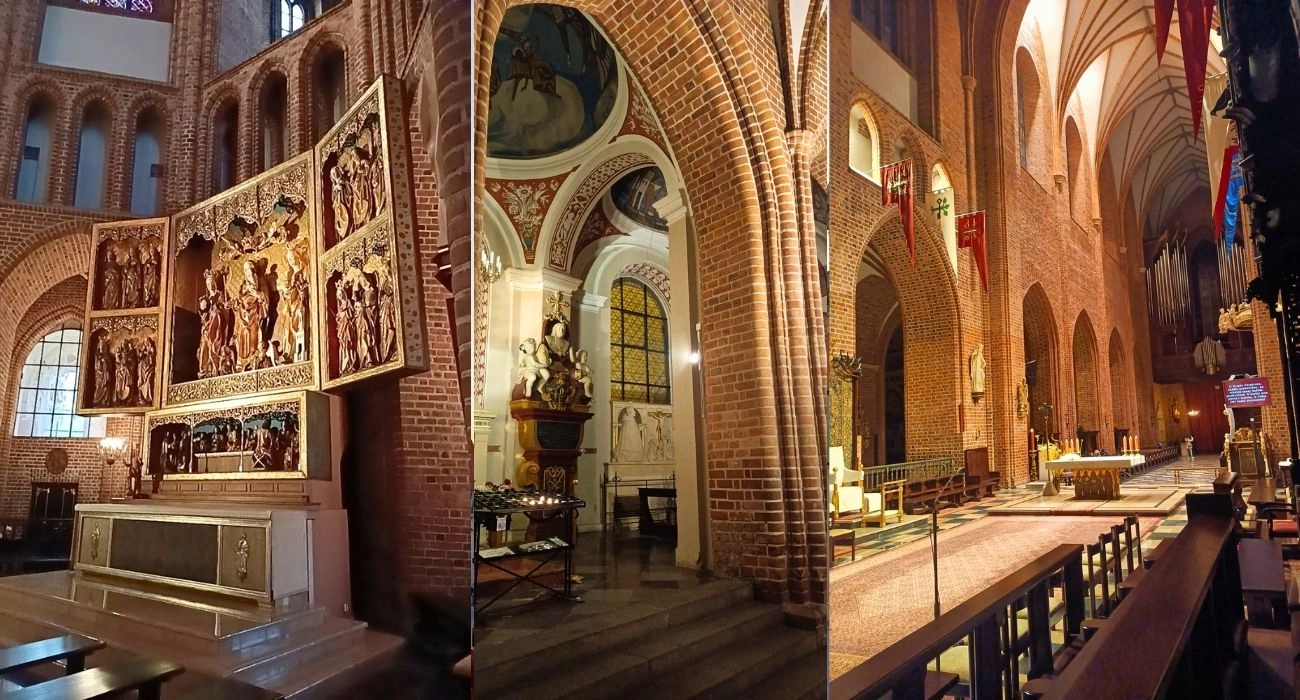
The cathedral preserves artistic masterpieces spanning several centuries. Gothic altarpieces, Renaissance tomb monuments, and Baroque furnishings reveal how successive generations sought to express their faith and identity through art.
Among its most intriguing objects is the so-called Sword of Saint Peter. According to tradition, the relic was brought to Poland by the first bishop, Jordan, and was believed to be connected with the biblical story of Saint Peter in the Garden of Gethsemane. Modern scientific research has shown that the sword is indeed around two thousand years old and originates from the region of the Holy Land, adding another layer of fascination to its already remarkable story.
The cathedral also houses monuments to bishops, nobles, and churchmen whose lives helped shape the history of the region. Together, these artworks create a visual narrative that extends from the Middle Ages to modern times.
Beneath the Cathedral
Some of the most important discoveries lie below ground. Archaeological excavations beneath the cathedral have uncovered fragments of the earliest church structures, traces of medieval walls, and what is believed to be an early baptismal basin dating back to the time of Mieszko I.
These remains offer a rare glimpse into a period that is often difficult to reconstruct from written sources alone. They provide direct physical evidence of the transformation of a pagan tribal society into a Christian kingdom and the emergence of the foundations upon which the Polish state was built.
A Monument to Continuity
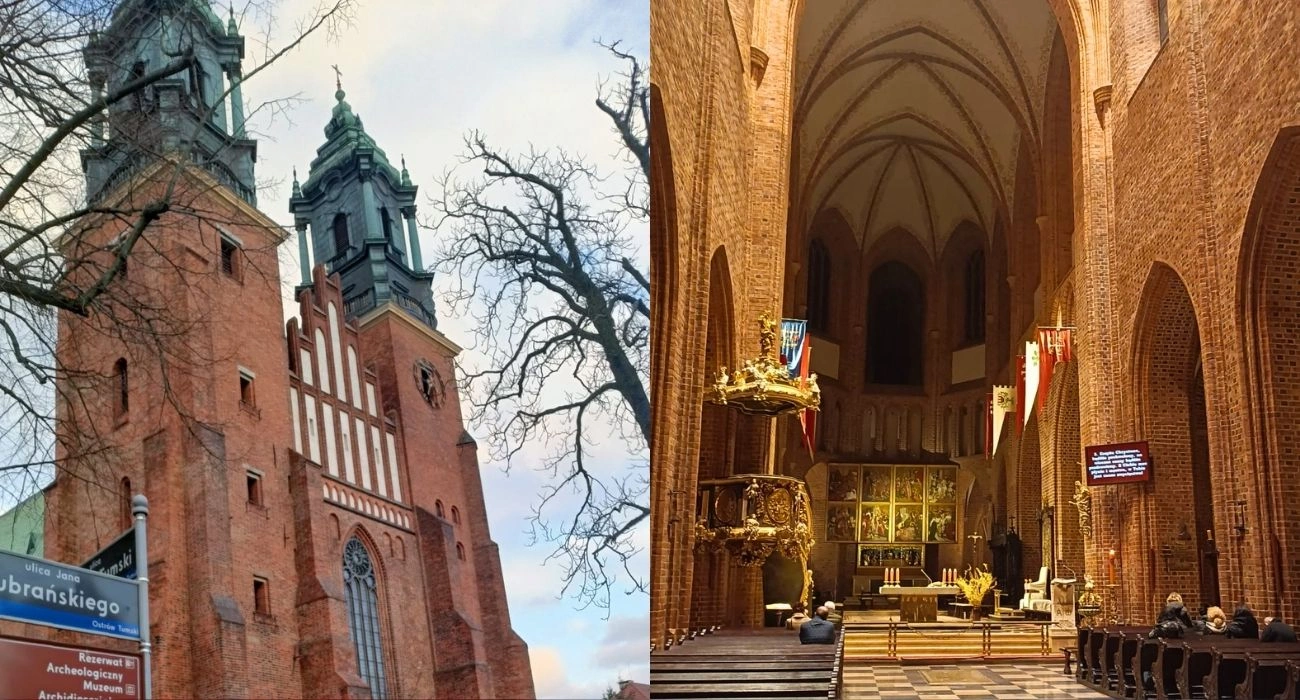
For historians, Poznań Cathedral is far more than an architectural landmark. It is one of the few places where the beginnings of Poland can be explored through surviving buildings, archaeological remains, and centuries of accumulated memory.
When Pope John Paul II visited the cathedral in 1983, he observed that the site had played a fundamental role not only in the history of Christianity but also in the history of the Polish state and culture. His words captured what makes this place exceptional.
The cathedral is not simply an ancient church. It is a monument to continuity—a place where more than a thousand years of political, religious, and cultural history converge under a single roof, preserving the story of a nation from its earliest beginnings to the present day.
Categories
Tagged in this story
Image sources