
When Poland Lights Up the Night: The Beauty and Meaning of All Saints’ Day
Written by Admin • 2026-10-30 05:05:00
Topics
Every 1 November, Poland observes All Saints’ Day with a tradition that transforms cemeteries into landscapes of candlelight. Known as Wszystkich Świętych, the occasion brings families together to honour loved ones, preserve memories, and celebrate a cultural heritage rooted in remembrance.
When Poland Lights Up the Night
The Beauty and Meaning of All Saints’ Day
A Country United by the Light of Remembrance
The Meaning Behind Wszystkich Świętych
From Ancient Customs to a Living Tradition
Poland's relationship with the memory of the dead reaches beyond the Christian calendar. Before Christianity became established across the region, Slavic communities observed seasonal customs associated with remembering deceased ancestors. One of the traditions commonly discussed in this historical context is Dziady, a series of ancestral remembrance rituals connected with the belief that the living should maintain a symbolic relationship with those who had passed away.
Over time, Christian observances became deeply rooted in Polish society, and the remembrance of the deceased developed within the framework of All Saints' Day and All Souls' Day. Although these celebrations have different religious meanings from pre-Christian customs, the broader cultural emphasis on remembering ancestors remains an important part of Poland's heritage.
This historical connection helps explain why the November commemorations feel so deeply embedded in Polish identity. They are not simply dates on a religious calendar, but part of a longer cultural tradition of honouring those who came before.
Znicze: The Symbolism of Light and Remembrance
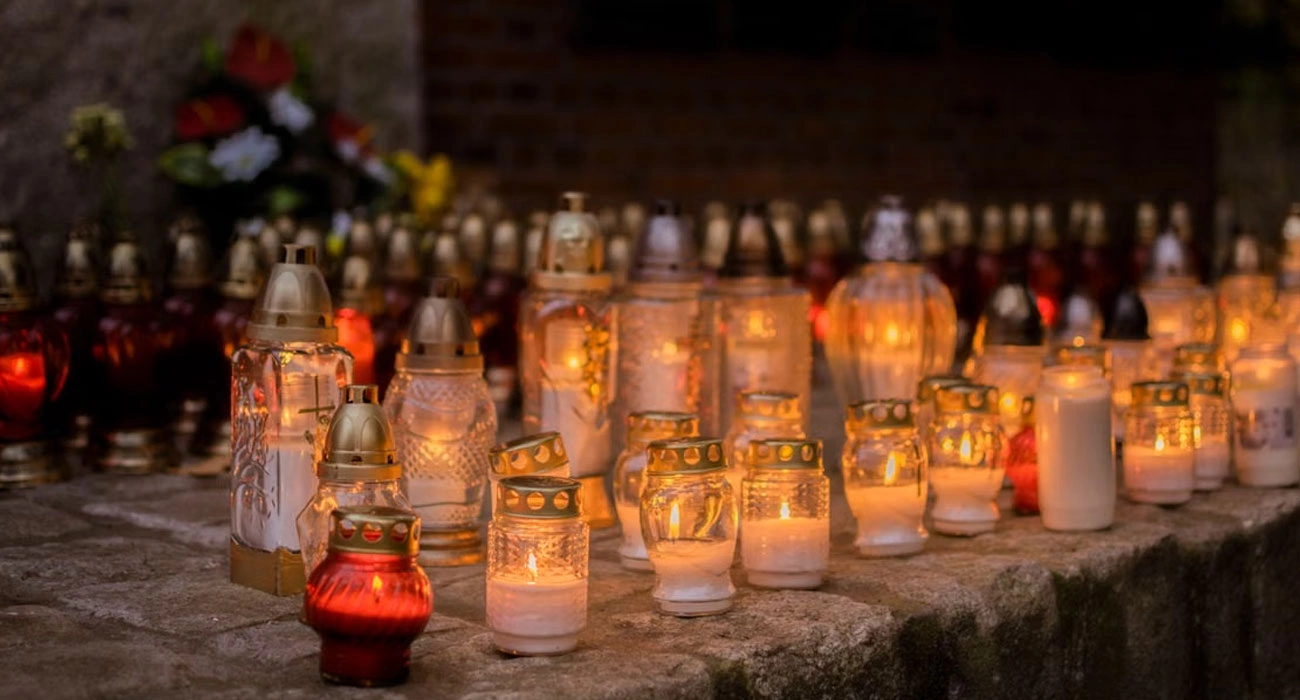
One of the most distinctive features of All Saints' Day in Poland is the widespread use of znicze; special candles placed on graves as a sign of remembrance. Their presence transforms the country's cemeteries into extraordinary landscapes of light, particularly after sunset on 1 November.
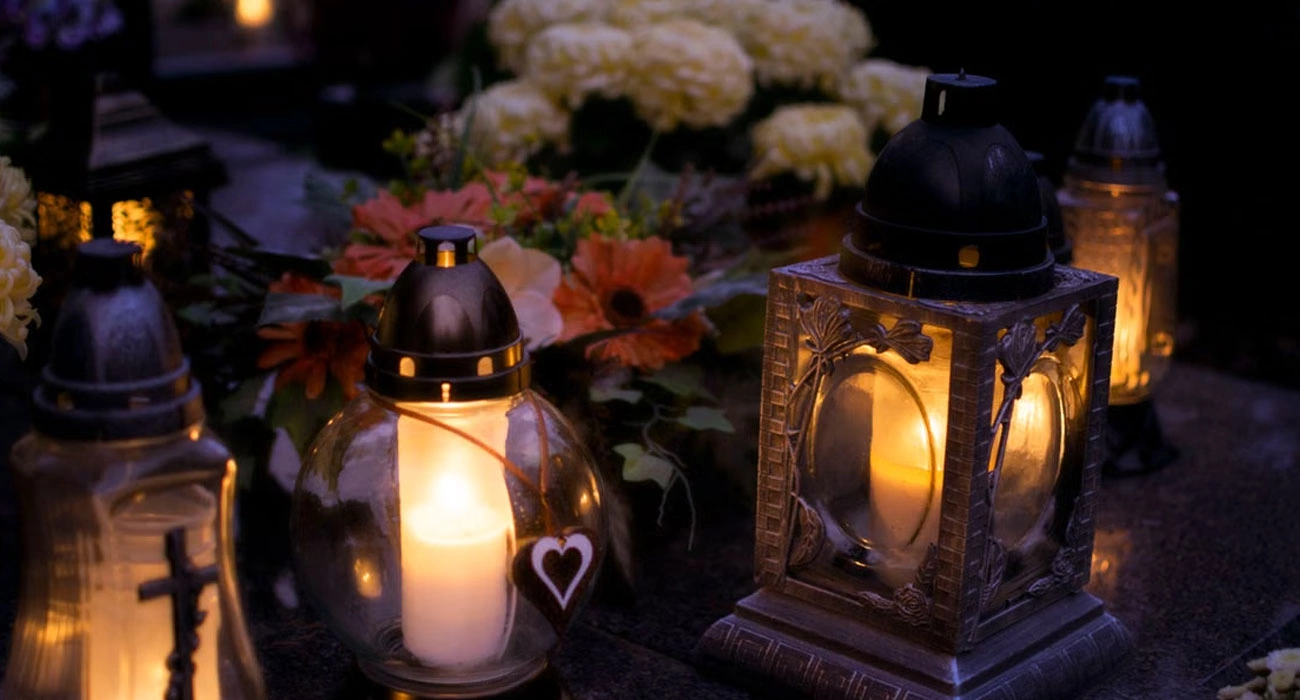
The tradition carries a simple but powerful message. A burning candle represents the memory of someone who is no longer physically present, while the act of lighting it becomes a personal expression of respect, love and connection. Families carefully select candles, arrange them around gravestones and return to the same places year after year.
The visual effect is especially striking in historic cemeteries, where the warm glow of hundreds or even thousands of candles contrasts with old stone monuments and autumn leaves. Yet the significance goes beyond appearance. Each flame represents an individual story, and together they create a shared expression of remembrance that can be felt across the entire country.
For many Poles, the sight of illuminated cemeteries has become inseparable from the experience of November. It is a tradition in which a small personal gesture contributes to a much larger cultural expression.
- 1 November: All Saints’ Day, or Wszystkich Świętych, is observed annually in Poland as a national public holiday.
- 2 November: All Souls’ Day, known as Zaduszki, follows All Saints’ Day and is dedicated to remembering and praying for the faithful departed.
- Historic Cemeteries: Warsaw’s Powązki Cemetery dates to the eighteenth century, while Kraków’s Rakowicki Cemetery was founded in 1803.
Remembering Together: A Tradition Across Generations
All Saints' Day is also an important occasion for family reunions. Many people travel from different parts of Poland to visit the cemeteries where their relatives are buried. For families separated by distance and the demands of everyday life, the occasion provides an opportunity to come together and reconnect with their shared history.
These visits often become moments of storytelling. Grandparents introduce younger family members to relatives they may never have met, while parents share memories of people whose lives helped shape the family. A name engraved on a gravestone becomes more than a historical detail; it becomes the starting point of a personal story.
This intergenerational aspect gives the tradition a meaning that extends beyond remembrance itself. It allows family histories, values and experiences to be passed from one generation to another. In this sense, visiting a cemetery is also an act of preserving identity and keeping family connections alive.
Cemeteries as Living Archives of Polish History
Poland's historic cemeteries preserve more than the memory of individuals. They also offer a glimpse into the country's changing cultural, artistic and social landscape. Their monuments, sculptures, inscriptions and architectural details reflect different historical periods and the stories of communities that have shaped the nation.
Warsaw's Powązki Cemetery and Kraków's Rakowicki Cemetery are among the country's most recognised examples. Both contain the graves of prominent figures from Polish cultural and public life, making them important places of historical remembrance as well as personal reflection.
During the November commemorations, these historic spaces take on an especially meaningful atmosphere. Visitors come not only to honour relatives but also to remember people whose contributions have influenced Polish society. The cemeteries become places where private memories and national history meet.
Their continued preservation is therefore an important part of protecting Poland's cultural heritage. Each monument and gravestone contributes to a wider historical record, reminding future generations of the people and stories that helped shape the country.
Categories
Tagged in this story
Image sources